Skip to content

Professional Development & Capacity Building

Training the Adults and Institutions that Young People Rely On

  • Prevention does not depend on young people alone. Adults, schools, institutions, and community systems need the knowledge, tools, and response structures to recognize risk earlier and respond with care when concerns arise.
  • UNITY Prevention provides professional development and capacity-building for parents, caregivers, educators, school leaders, youth-serving organizations, public agencies, institutions, and professionals who may encounter young people at risk of trafficking or exploitation.
  • These trainings help adults understand how exploitation happens, identify warning signs, strengthen internal response protocols, and coordinate support before harm deepens.
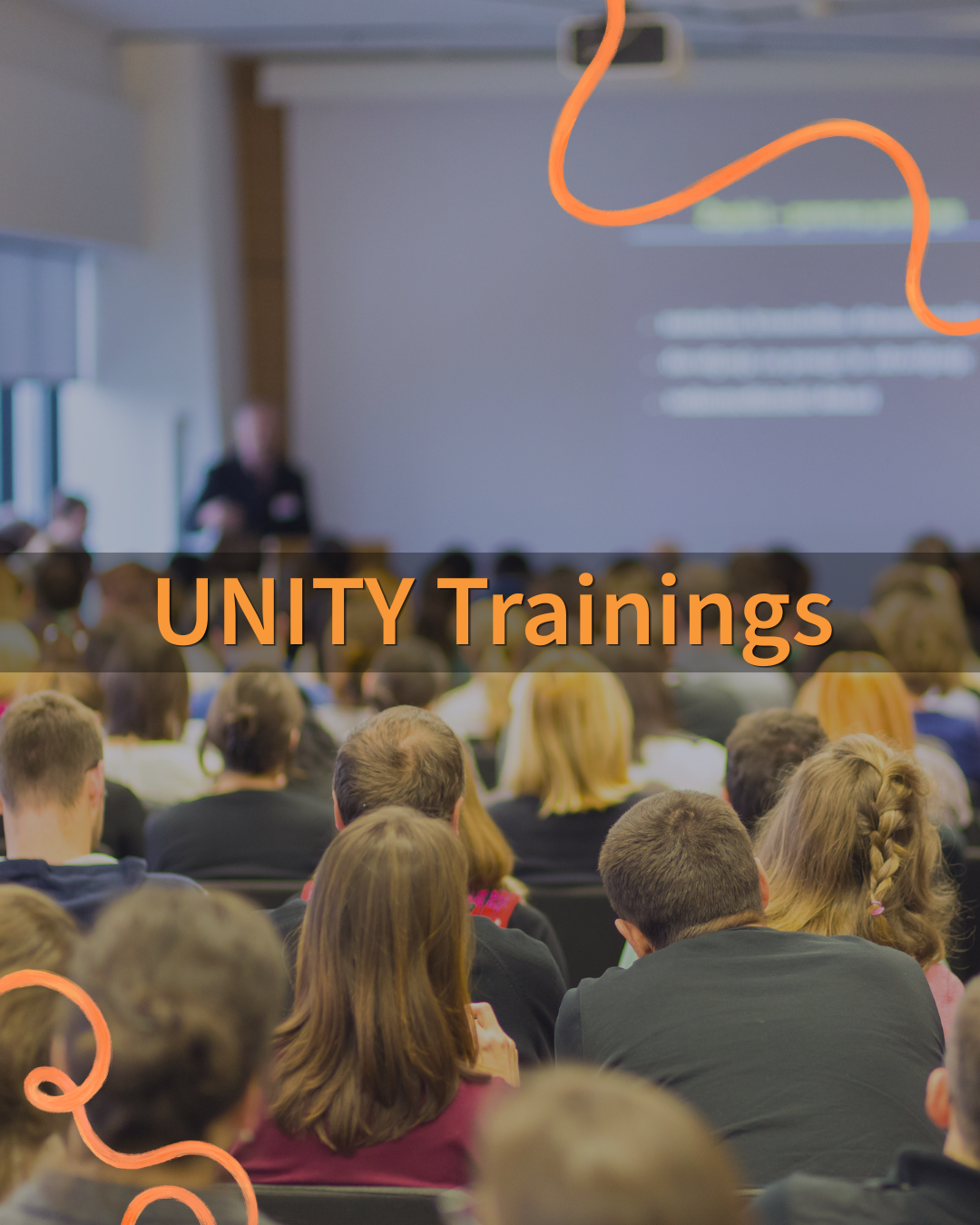
UNITY Trainings
unity

Why this Training Matters for Adults

  • Young people are often the first to experience risk, but adults are often the ones responsible for recognizing warning signs, responding to disclosures, and connecting youth to support.
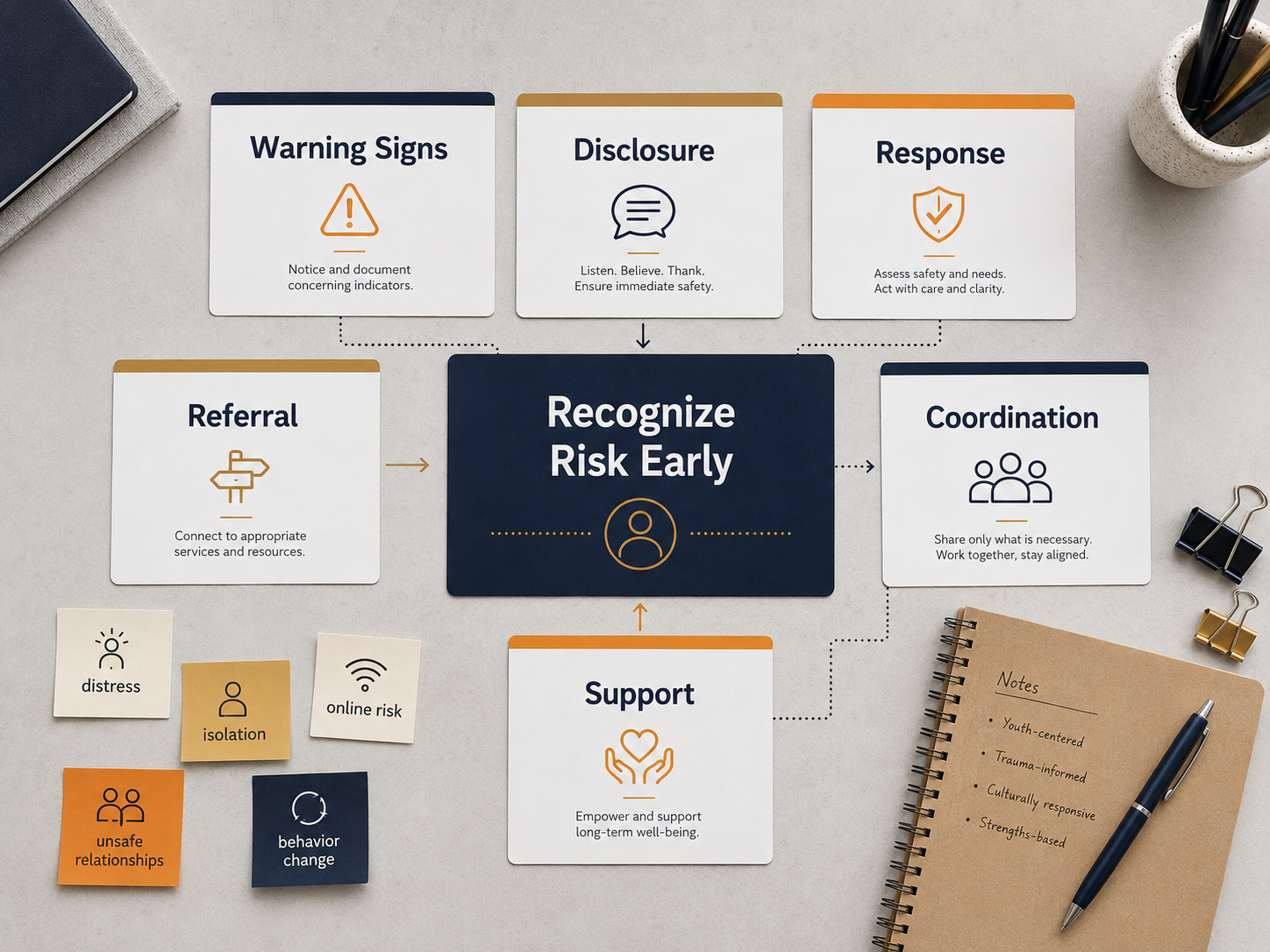
  • When adults are not trained, trafficking and exploitation concerns can be missed, misunderstood, minimized, or handled inconsistently. A young person may show signs of distress, instability, coercion, isolation, unsafe relationships, online exploitation, or sudden behavioral changes without those signals being connected to possible exploitation risk.
  • Professional development helps close that gap.
  • UNITY Prevention equips adults and institutions with practical knowledge, shared language, and response strategies so they can identify concerns earlier and act with greater clarity, confidence, and coordination.

What the Training Covers

UNITY Prevention’s professional development is designed to help adults move beyond general awareness and into practical prevention and response readiness. Each training can be tailored to the partner organization's audience, setting, and goals.

Training topics may include:

  • Understanding human trafficking and exploitation
  • Recognizing grooming, coercion, manipulation, and control
  • Identifying warning signs among youth and young adults
  • Understanding online exploitation and recruitment risks
  • Recognizing how instability can increase vulnerability
  • Responding appropriately when a concern is disclosed or suspected
  • Supporting youth without fear-based or shame-based messaging
  • Building safer referral pathways and response protocols
  • Strengthening coordination across schools, agencies, and community partners
  • Understanding how LIGHTS can support youth-facing prevention education

Who this training is for, or can benefit

Parents and Caregivers

Parents and caregivers need practical tools to understand risk, talk with young people, recognize concerning changes, and respond without panic or blame.

Educators and School Staff

Teachers, counselors, administrators, social workers, school safety personnel, and district leaders are often positioned to notice early warning signs and connect youth to support.

School Districts

District-wide training helps create shared language, consistent protocols, and coordinated prevention strategies across schools and departments.

Youth-Serving Organizations

Youth-serving nonprofits, after-school programs, community centers, and mentoring programs can use training to strengthen the protective role they already play in young people’s lives.

Public Agencies and Institutions

Public agencies, child welfare systems, juvenile justice partners, diversion programs, and community institutions can use professional development to improve identification, referral, and coordinated response.

Law Enforcement and Community Safety Partners

When appropriate, training can support collaborative response by helping community safety partners understand youth vulnerability, exploitation dynamics, and the importance of coordinated, trauma-informed pathways to support.

Capacity Building for Schools and Organizations

Some partners need more than a single training session. UNITY Prevention can support schools, districts, and organizations as they build a more comprehensive prevention and response approach.

Capacity-building may include:

  • Gathering key stakeholders to support a collective prevention response
  • Training leaders and staff to better understand trafficking and exploitation
  • Helping organizations establish strategies for responding to suspected trafficking
  • Supporting coordinated responses between schools, community organizations, and public systems
  • Certifying select staff to implement the LIGHTS curriculum directly with youth
  • Consulting with organizations that want to strengthen services or programming for youth experiencing trafficking or related forms of exploitation
ChatGPT Image Jun 23, 2026, 11_45_09 AM

Supporting LIGHTS Implementation

Professional development is closely connected to the LIGHTS Prevention Curriculum.

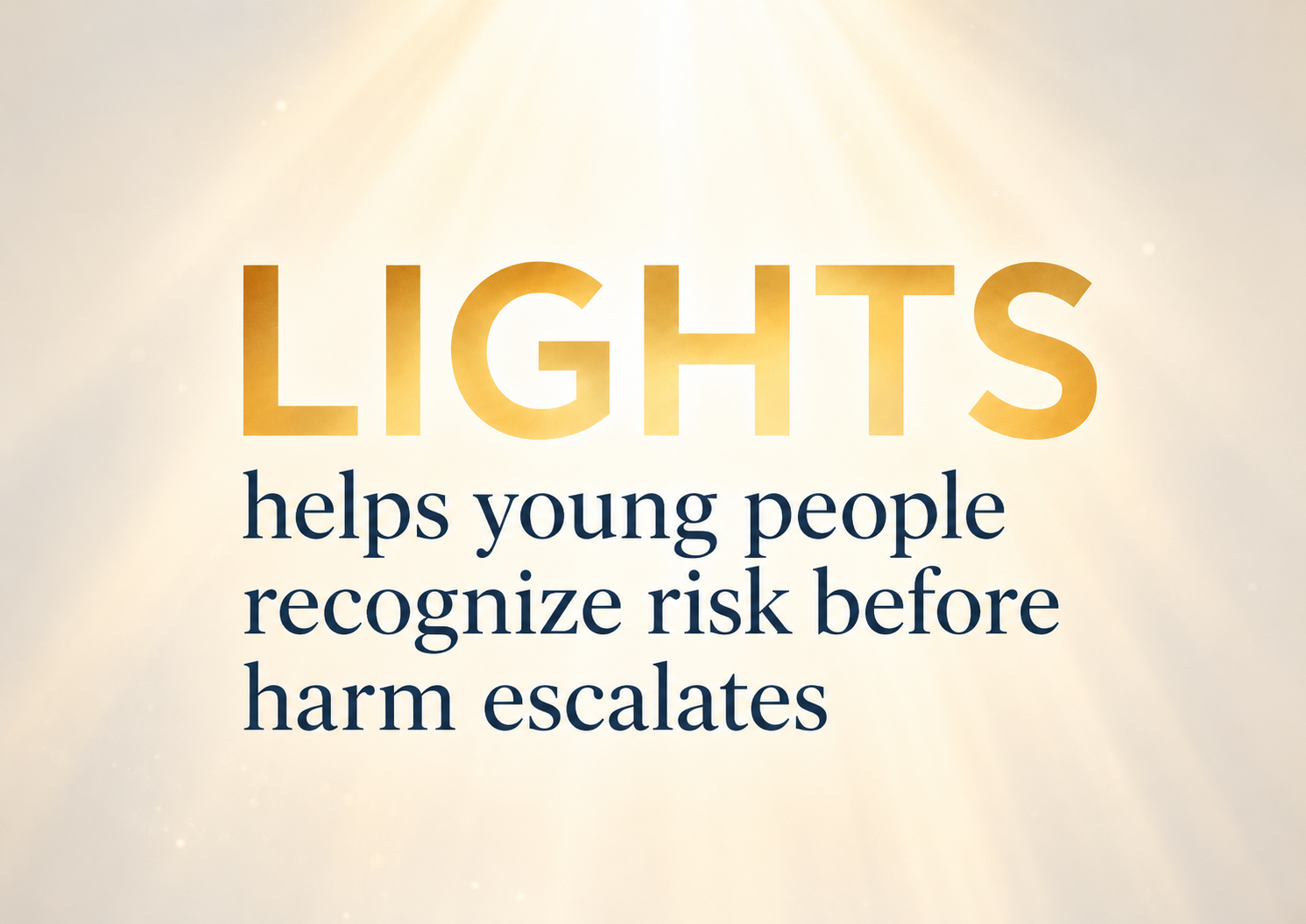
LIGHTS gives young people the language and knowledge to recognize risk. Adult training helps ensure that the people around them are prepared to respond when concerns arise.

For schools and youth-serving organizations, UNITY Prevention can support both sides of prevention:

Youth-facing education through LIGHTS
Adult-facing training and professional development
Staff preparation to support curriculum delivery
Response planning when concerns are identified
Consultation for implementation and follow-up

This creates a more complete prevention model: young people are informed, and adults are prepared.

Explore LIGHTS

Training Formats

UNITY Prevention can work with partners to design training that fits the setting, audience, and level of need.
Possible formats include:
 

Introductory Awareness Training

Professional Development Workshops

Parent and Caregiver Sessions

School or District Staff Training

Leadership Briefings

Train-the-Trainer or Staff Certification Models

Protocol and Response Planning Sessions

Consultation for Organizational Capacity-Building


Training may be offered as a standalone session or as part of a broader prevention engagement. 

For Schools and Districts

Schools are often central to prevention because they are one of the few systems that regularly interact with young people over time.

UNITY Prevention supports schools and districts by helping staff understand trafficking dynamics, identify concerns, strengthen response protocols, and implement prevention education in a structured and age-appropriate way.

This work can support:

Student safety initiatives, School counseling and social work teams, Health and wellness education, District-wide prevention planning, School safety and response protocols, Curriculum implementation through LIGHTS, and Coordination with community and public-sector partners.

For Parents and Caregivers

Parents and caregivers play a critical role in prevention, but many do not know how to talk about trafficking and exploitation in a way that is clear, age-appropriate, and not fear-based.

UNITY Prevention helps parents and caregivers understand how risk can emerge, how traffickers and exploiters may use trust or manipulation, and how to recognize when a young person may need support.

Parent and caregiver sessions can help adults build confidence, ask better questions, and strengthen protective relationships at home and in community settings.

For Institutions and Community Partners

Youth vulnerability does not sit inside one system. It can show up across schools, shelters, health providers, public agencies, legal systems, workforce programs, faith communities, and neighborhood organizations.

UNITY Prevention helps institutions and community partners build shared understanding and strengthen coordination. The goal is earlier identification, safer response, and clearer pathways to support.

This is especially important for organizations serving youth who may be experiencing housing instability, economic vulnerability, system involvement, social isolation, online risk, or other conditions that can increase vulnerability to exploitation.

Proven impact for communities and institutions

5,000+
Adults trained across schools and organizations
200+
Institutions strengthened with prevention capacity
3x
Earlier identification of warning signs reported
Who is professional development designed for?

Professional development is designed for adults, professionals, and institutions that interact with young people or vulnerable communities, including parents, caregivers, educators, school staff, public agencies, youth-serving organizations, law enforcement partners, and community-based providers.

Is this the same as the LIGHTS curriculum?

No. LIGHTS is the youth-facing prevention curriculum that educates young people about trafficking and exploitation risks. Professional development is the adult-facing training and capacity-building work that helps parents, schools, institutions, and professionals understand trafficking, recognize risk, and respond appropriately.

Can training be customized?

Yes. Training can be adapted based on the audience, setting, and goals of the partner organization to ensure content is relevant and actionable for your specific context and needs.

Can staff be trained to deliver LIGHTS?

Yes. UNITY Prevention can support select staff in implementing LIGHTS directly with youth, depending on the partnership and training model. This helps organizations build internal capacity for ongoing prevention education.

Is this only for schools?

No. Schools are a major audience, but training can also support parents, youth-serving organizations, community partners, public agencies, institutions, and professional groups who work with or encounter young people at risk.

Does training include response planning?

It can. Depending on the engagement, UNITY Prevention can support organizations in thinking through response protocols, referral pathways, stakeholder coordination, and capacity-building needs to strengthen systems around young people.

unity2

Ready to strengthen your prevention capacity?