Skip to content

UNITY Centers

Community-based prevention hubs built to reduce vulnerability before harm deepens.

  • UNITY Centers are the next evolution of UNITY Prevention’s work: place-based hubs that bring prevention education, professional training, case coordination, and trusted community partnerships closer to the young people and communities that need them.
unity centers

More than a center. A coordinated prevention model.

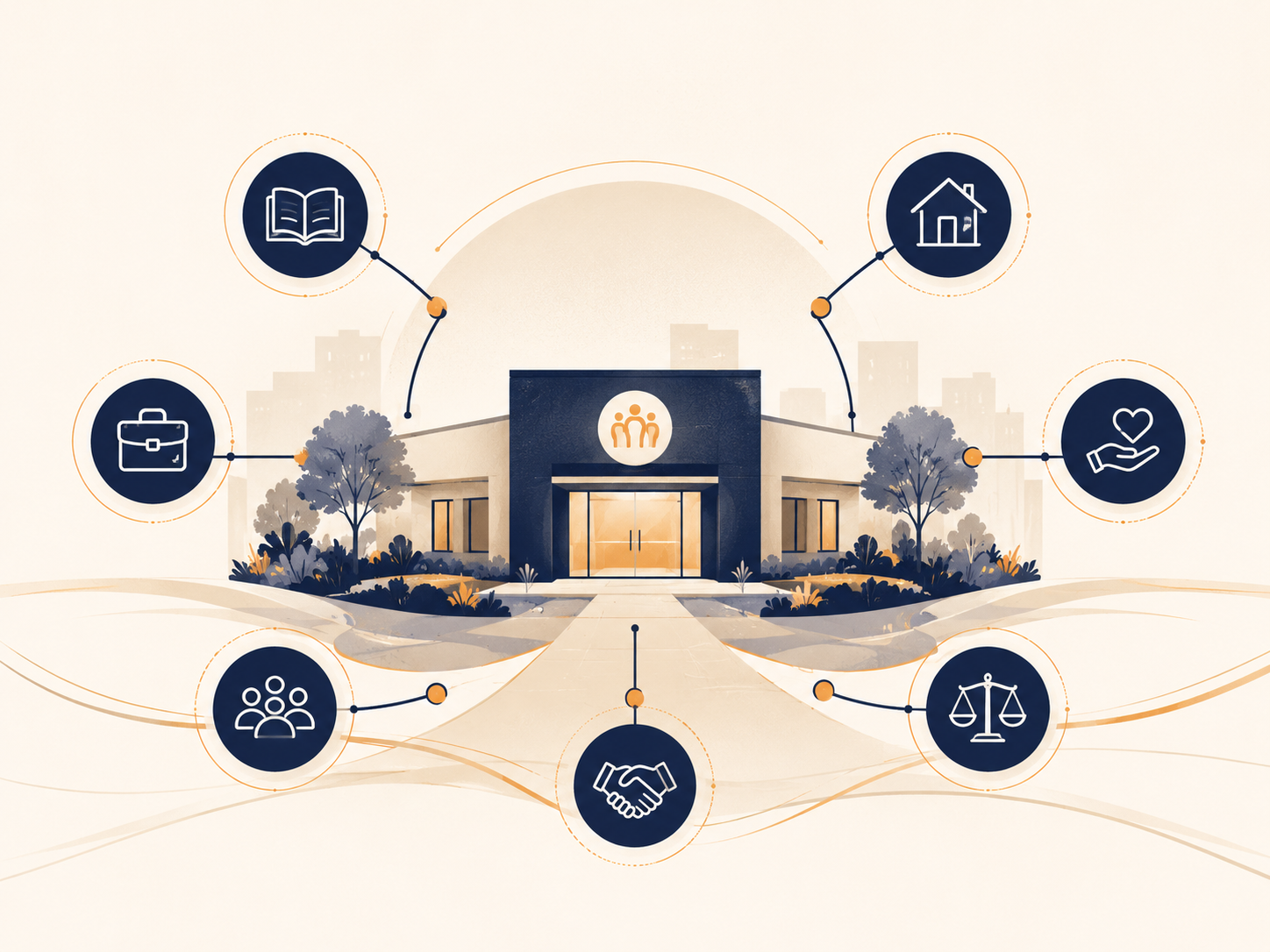
 A UNITY Center brings together prevention education, referral pathways, case coordination, and partner-based support through a trusted local hub. Each center is designed to help communities identify vulnerability earlier, coordinate services more effectively, and connect young people to support before harm escalates. 
 Why UNITY Centers Exist 

 Young people facing instability often interact with multiple systems: schools, shelters, workforce programs, health providers, legal services, public agencies, and community organizations. When those systems are disconnected, young people can be left to navigate complex support pathways on their own. UNITY Centers are designed to reduce that fragmentation by creating a central hub for coordination, referrals, prevention programming, and trusted support. 

The Model

Referral Pathways

 Centers build trusted referral relationships with local partners who identify young people who may benefit from support. 

Case Coordination

 Staff help participants navigate services, develop plans, and stay connected to support across multiple providers. 

Partner-Based Services

Centers do not replace local providers. They strengthen the ecosystem by coordinating with housing, health, education, legal, workforce, and community partners.

Prevention Programming

Centers can host workshops, trainings, and skill-building opportunities that support safety, stability, and opportunity.

UNITY logo FINAL-1

The first UNITY Center is taking shape in Detroit.

 UNITY Detroit is the first implementation of the UNITY Centers model. Designed as a referral-based prevention hub for young adults ages 18 to 21, UNITY Detroit will provide case management, coordinated referrals, prevention programming, and partner-based support. The center is currently in development and will serve as the first local model for how UNITY Centers can strengthen prevention infrastructure in communities across the country. 

Learn About UNITY Detroit
What is a UNITY Center?

A UNITY Center is a community-based prevention hub that brings together prevention education, referral pathways, case coordination, and partner-based support through a trusted local infrastructure model.

How do UNITY Centers coordinate services?

UNITY Centers coordinate services by building trusted referral relationships with local partners, providing case management, helping participants navigate multiple providers, and creating a central hub that reduces fragmentation across schools, housing, health, legal, and community systems.

Who can partner with UNITY Centers?

UNITY Centers are designed to work alongside public agencies, schools, youth-serving organizations, housing providers, workforce programs, healthcare partners, legal service providers, survivor support organizations, and community-based organizations.

Can UNITY Centers be adapted to different communities?

Absolutely. UNITY Centers are designed to be adapted to local conditions while maintaining a consistent prevention framework. Each community has different needs, partners, and service systems, so centers are customized to fit local contexts.

What are the benefits of prevention programming at UNITY Centers?

Prevention programming helps identify vulnerability earlier, builds skills and knowledge before harm escalates, provides workshops and trainings that support safety and stability, and creates opportunities for young people to connect with trusted support systems.

Where is the first UNITY Center being developed?

UNITY Detroit is the first implementation of the UNITY Centers model, serving young adults ages 18 to 21. It is currently in development and will provide high-touch case management, coordinated referrals, and partner-based support as a local model for future centers.

Untitled design (15)

Bring prevention closer to community.